Importing Lentils and Essential Commodities from Australia to Bangladesh
Published on May 10, 2026
Corporate Import Process, BL Sale Strategy and Banking Structure. This article adapts the provided Tiger Trading BD PDF into a blog-ready guide for corporate commodity importers.
Introduction
Bangladesh has become one of South Asia's fastest-growing food consumption markets. As urbanization, population growth, and industrial food processing continue expanding, the demand for imported commodities has increased significantly. Among the most important imported products are lentils, chickpeas, pulses, wheat, canola, and animal feed ingredients. Australia has emerged as one of the most reliable sourcing destinations for Bangladeshi importers because of its strong agricultural production, export compliance standards, and large-scale farming capacity.
For companies involved in commodity import, importing from Australia is not only about purchasing products. It involves banking coordination, logistics management, LC operations, BL sale strategies, customs clearance, and market timing. Corporate importers must carefully manage financial risks while maintaining supply chain stability.
Why Australia Is a Strong Sourcing Partner
Australian agricultural exporters are widely respected for maintaining international standards regarding moisture levels, product quality, grading systems, packing consistency, and shipment reliability. Bangladeshi importers often prefer Australian lentils and pulses because the products are cleaner, better processed, and more stable during transportation.
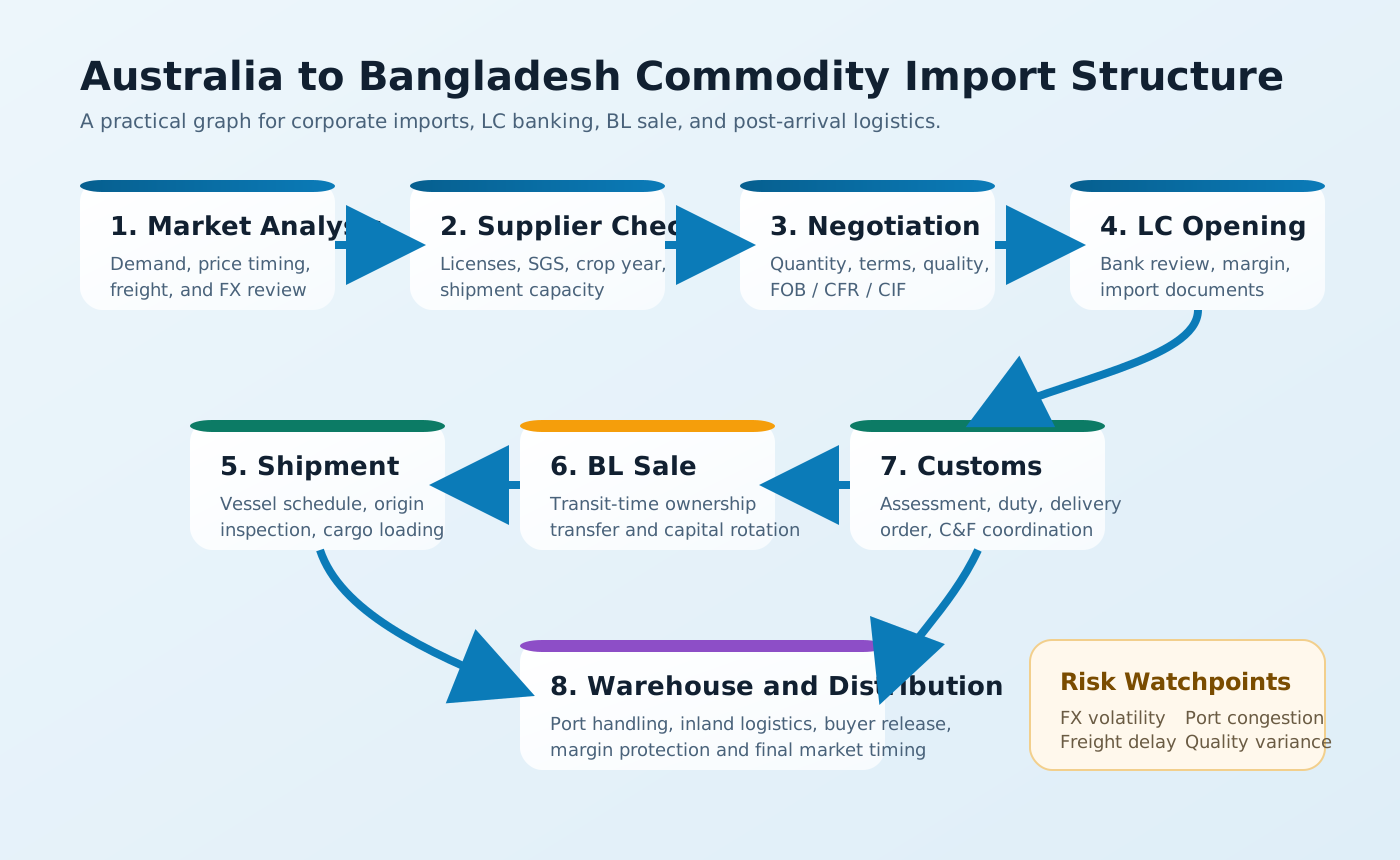
The import process usually begins with market analysis. Corporate companies first study local market demand in Dhaka, Chattogram, and other wholesale hubs. They monitor seasonal price movements, international commodity exchanges, freight charges, and exchange rates. Successful importers understand that timing is critical. Buying at the wrong time may reduce profitability even when the product quality is good.
Supplier Verification and Price Negotiation
After analyzing the market, companies identify Australian suppliers or exporters. Most professional importers perform supplier verification before placing orders. They review export history, trade licenses, product specifications, shipment records, and quality certifications. Reliable suppliers generally provide SGS inspection reports, moisture level analysis, crop year details, and shipment capacity information.
Price negotiation is another major stage. Importers negotiate based on quantity, shipment schedule, quality tolerance, packaging standards, and freight conditions. Transactions are usually completed under FOB, CFR, or CIF terms. For Bangladesh imports, CIF Chattogram is commonly preferred because it allows easier shipment management for local companies.

LC Banking Structure
The banking structure plays a central role in commodity import. Most corporate importers in Bangladesh use Letter of Credit systems through commercial banks. The LC protects both buyer and seller by ensuring proper document handling and payment security. Banks review import documents and verify shipment compliance before releasing payments.
To open an LC, importers usually require an Import Registration Certificate, trade license, TIN certificate, VAT registration, insurance documents, and a proforma invoice. Depending on the importer's banking relationship, banks may allow different margin structures and financing arrangements.
BL Sale Strategy
One of the most important strategies in commodity trading is the BL sale process. BL refers to the Bill of Lading, which is the key ownership document issued after cargo loading. In many commodity transactions, importers transfer ownership of the cargo by endorsing or selling the Bill of Lading before the vessel arrives in Bangladesh.
BL sale provides multiple strategic advantages. It allows faster capital rotation because the importer can recover funds before the shipment reaches the destination port. It also reduces warehouse exposure and storage risk. In highly volatile markets, BL sale enables traders to take advantage of rising commodity prices during transit.
Large corporate importers frequently use BL sale systems when distributing cargo among wholesalers, food processors, feed mills, or institutional buyers. The process helps divide shipment ownership without physically unloading or storing the cargo.
Banking and Risk Management in BL Sale
Banking strategy is extremely important in BL sale operations. Some transactions involve direct BL endorsement between trusted companies. Others use bank-controlled document transfer systems where banks release documents only after payment verification. High-volume traders may also use structured financing arrangements involving secondary sale contracts and deferred payment systems.
Currency fluctuation remains one of the biggest risks in international commodity trading. Since most transactions are conducted in US dollars, Bangladeshi importers must carefully manage exchange rate exposure. Importers often plan payment schedules strategically to reduce the impact of currency volatility.
Shipment delay is another operational risk. Weather conditions, vessel congestion, port delays, or global supply chain disruptions may affect delivery schedules. Experienced importers maintain safety buffers and continuously monitor vessel tracking systems.
Quality, Customs and Logistics
Quality management is equally critical. Many corporate buyers use third-party inspection companies such as SGS to verify product standards before shipment. Moisture level analysis, packing inspection, and contamination checks are essential in food commodity imports.
Once cargo arrives at Chattogram Port, importers begin customs clearance procedures. The process includes document submission, customs assessment, duty payment, delivery order collection, and transportation arrangement. Most companies work closely with C&F agents and freight forwarders to speed up the clearance process.
Logistics efficiency directly affects profitability. Delays at ports may increase demurrage costs and reduce trading margins. Corporate importers therefore prioritize warehouse planning, transportation management, and efficient unloading coordination.
Future Outlook
The future of commodity import in Bangladesh remains highly promising. Demand for lentils, pulses, wheat, and feed ingredients continues increasing because of population growth and industrial expansion. Food processing industries are also expanding rapidly, creating additional opportunities for large-scale importers.
Companies that establish strong banking relationships, reliable supplier networks, and efficient logistics systems will continue gaining competitive advantages in the Bangladeshi market. Importers who combine smart financing strategies with disciplined trade management can achieve sustainable long-term growth in the commodity sector.
Final Takeaway
Modern corporate trading is no longer dependent only on purchasing products at lower prices. It depends on market intelligence, supply chain efficiency, financial planning, and risk management. Importers must continuously monitor global crop conditions, freight markets, fuel prices, and international trade developments.
Australia will likely remain one of the most important sourcing destinations for Bangladesh because of its strong agricultural infrastructure and export reliability. As demand for food commodities rises in Bangladesh, professional import companies will continue expanding their operations through structured banking systems and strategic trade management.
For companies planning to enter the commodity import business, understanding the complete import structure - including LC procedures, BL sale systems, customs operations, supplier verification, and logistics coordination - is essential for building a successful and sustainable trading operation.